


This guide explores how the phaser effect can elevate your music, adding motion and creativity to your mixes. Learn about its history, inner workings, and professional production techniques.
If you’ve ever listened to a guitar part that surges like ocean waves or a synth pad that seems to float in the air, you’ve likely encountered a phaser. Among the many modulation effects available to music producers, it remains one of the most beloved and frequently used. But what exactly gives the phaser its power, and how can you skillfully integrate it into your mixes?
This article will lead you deep into the fascinating world of the phaser, covering its principles, historical origins, and operating mechanisms. More importantly, I will share expert techniques on how to use a phaser to elevate your musical productions to new heights.
What is a Phaser?
A phaser is an effect that generates modulation by altering the phase of an audio signal, adjusting the timing relationships between different frequency components. This manipulation creates constructive and destructive interference patterns, producing peaks and notches in the audio spectrum. The result is a distinctive sweeping sound, often described as a “whoosh.” Simply put, a phaser works by duplicating the original signal, delaying certain parts of the copy, and then blending it back with the original to create a smooth, undulating motion.
In a mix, the phaser effect adds depth and movement, transforming static sounds into vibrant, living textures. It’s a truly magical effect that, when used wisely, can turn a mundane sound into a captivating auditory experience.
A Brief History of the Phaser
The phaser first emerged in electronics labs during the 1960s, as engineers experimented with circuits capable of manipulating audio phase. By the 1970s, the phaser rapidly gained popularity, particularly in psychedelic rock and mainstream rock. Legendary artists like Jimi Hendrix and David Gilmour of Pink Floyd famously applied phasers to their guitars and synthesizers, creating expansive, ethereal soundscapes.
Over time, the phaser has become a staple across classic rock, electronic music, pop, hip-hop, and many other genres, showcasing its remarkable adaptability and versatility.
Deconstructing Phaser Parameters
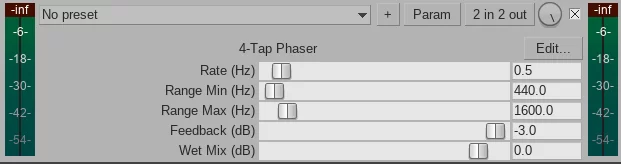
Figure 1: Many DAWs come with built-in phasers. Here is REAPER’s 4-Tap Phaser. (Image source: article translator)
When you use a phaser, whether as a hardware pedal or a DAW plugin, you’ll notice several controls. Understanding these parameters opens up a world of sonic possibilities.
- Rate: Determines the speed of the sweep. Lower rates create a smooth, broad effect, as if the sound is slowly drifting through space. Higher rates produce faster, more pronounced sweeping that can be rhythmic or even jarring.
- Depth: Sets the intensity of the sweep. At low settings, the phaser effect is subtle, gently pushing the sound from behind. Higher depth creates a more dramatic, wider sweep affecting a broader frequency range.
- Mix (Wet/Dry): Adjusts the balance between the processed (effected) signal and the original (dry) signal.
- Feedback (Resonance): Sends a portion of the processed signal back into the input, intensifying the effect. Moderate feedback adds resonance and character, while too much can result in harsh, piercing sounds.
- Stages: Phasers typically come in 2, 4, 6, or higher stage configurations. Each stage adds another filter to the signal, increasing the complexity and nuance of the effect.
How to Use a Phaser in Your Productions
Using a phaser creatively in your mix is where the real magic happens! While it’s tempting for beginner producers to slap a phaser on everything, the key is listening to how it interacts with other musical elements.
Guitar & Phaser: A Perfect Match
Since the era of Hendrix, the phaser has been one of the guitar’s closest allies. A well-tuned phaser can transform a simple riff into mesmerizing, magical sound. Pro tip: For an open, undulating guitar tone, set the rate low to add motion without overwhelming the original sound. Avoid setting the depth too high. The optimal state is where you can subtly perceive the sweep without it swallowing the guitar’s natural timbre.
On Vocals: Less is More
While rare on lead vocals, a phaser can add unique texture and depth to backing vocals. Keep the rate and depth low so the effect sits appropriately, acting like a subtle whisper in the background.
Advanced Tip: Try automating the feedback parameter at specific points. This will add dynamic movement to the harmonies and create interesting interactions with other effects like delay.
Synthesizers: Source of Motion
Synthesizers share a special, intricate relationship with phasers. When applied to pads, leads, or even basses, a phaser can instantly imbue them with lifelike, flowing motion. For example, using a 6 or 8-stage phaser on atmospheric pads adds harmonic complexity, creating a fascinating sensation of rotation in space.
Drum & Percussion Techniques
This is an underexplored but highly creative area. Applying a phaser to percussion elements, especially hi-hats or entire drum loops, can create unexpected rhythmic textures. Here, the phaser breaks up the rigidity of the drums, making them feel more organic and energetic.
A Technique: Apply the phaser to only a specific layer of your percussion (e.g., the hi-hats) while leaving others untouched. This creates rhythmic contrast and adds a new dimension to your groove.
Creative Phaser Techniques
Once you’ve mastered the basics, it’s time to experiment. Here are some creative techniques to explore new sonic territories.
Parallel Phasing
A highly practical technique is using the phaser in parallel (or “parallel” processing). This lets you add movement and depth while retaining the clarity of your original sound. Create an effects bus with a phaser and blend it in with the dry signal. This is especially useful for vocals and guitars, as it prevents the phaser from muddying the clarity of the source.
Parameter Automation
Automation is one of music production’s most powerful tools. Automating the phaser’s rate, depth, and feedback throughout a song creates evolving, non-static effects. Instead of a fixed phaser sound, you can have the effect intensity change with the track’s progression—intensifying during a chorus or becoming subtle in a verse.
Combining Phaser with Reverb and Delay
Delay and reverb are the phaser’s best partners. Applying the phaser before a delay or reverb creates incredibly immersive soundscapes. Delay, in particular, amplifies the phaser’s sweeping dynamics, generating psychedelic, ethereal soundscapes that add unparalleled atmosphere.
Advanced Tips for Mastering the Phaser
- Don’t Overuse: Phasers are tempting, but balance is key. Applying phaser to every instrument will make your mix muddy. Strategically choose which elements will benefit most.
- Use Different Phasers in Different Sections: Don’t be afraid to use multiple phasers with different settings in the same production. For instance, you might want a subtle phaser on the vocals and a more aggressive one on the synths or guitars.
- Automate for Transitions: Automate phaser parameters (like rate or feedback) during breakdowns or transitions. This creates drastic atmospheric shifts without fundamentally changing your track’s core elements. This technique is very effective in electronic and urban music genres where breakdowns are structurally important.
- Combine with Distortion: Using a phaser after distortion can highlight specific frequencies, adding more harmonics to your sound. This combination is particularly effective for basslines in Dubstep or Trap music, where distortion is a fundamental element.
Phaser in Modern Production: A Universal Tool
The phaser is a tool that has transcended musical trends, maintaining its place from psychedelic rock to today’s urban and electronic genres. Its ability to adapt to different sonic environments—whether adding dynamic texture to Trap or Jersey Drill or creating sweeping depth in House, Techno, or Future Bass—is remarkable.
Phaser in Trap & Jersey Drill: Groove & Oscillation
In genres driven by powerful rhythmic patterns, deep 808 basses, and rapid-fire percussion like Trap and Jersey Drill, a phaser can yield surprising results. Applied subtly to hi-hats or snare rolls, it injects an undulating motion, making them more lively. For example, a low-rate, moderate-feedback phaser on a typical Trap hi-hat pattern creates a smooth groove that sits perfectly with the kick and snare.
In Jersey Drill, where undeniable energy and intense percussive architecture are key, a phaser can enhance the sense of motion in basslines and vocals. Applying a high-feedback phaser to vocal samples can add a captivating layer of detail, creating a continuous flow that accentuates the genre’s signature syncopation.
Phaser in Electronic Music: A Sonic Evolution
In electronic music genres like House, Techno, and Trance, phasers are essential for creating immersive textures. These styles often feature repetitive layering of synths and drums, and the phaser helps maintain constant, evolving movement. For instance, applying a low-rate, high-depth phaser to a main synth in a Techno groove adds a subtle sweep that injects dynamism without disrupting the rhythmic pattern.
Urban Electronic: Phonk, Future Bass & More
Phonk, with its blend of distorted basses and gloomy vocal samples, is another style where phasers shine. Applying a phaser to a bassline adds dimension and texture without reducing its power. Using a moderate-feedback phaser after distortion helps maintain the bass’s dynamic and enveloping feel while letting the high-end oscillate smoothly.
Future Bass, characterized by bright chords and wide melodies, offers fertile ground for creative phasing. Applying a phaser to synth chords adds a constant sense of oscillation, providing interest to otherwise static sounds. The key is adjusting the rate and depth so the motion is subtle, complementing rather than overwhelming the melodic elements.
Conclusion
A phaser is far more than just a modulation effect. It’s a tool that, when used consciously and creatively, can transform the simplest elements of your production into dynamic, interesting, and constantly moving parts.
Whether in electronic, urban, or even experimental music, the phaser offers endless possibilities for any producer looking to add more texture and depth to their music. The key lies in subtlety and in letting the phaser naturally ebb and flow within the mix without obscuring the essence of your track.
About the Author: Odiseo is a music producer and mixing/mastering engineer. He is also a performing musician, beat maker, live sound engineer, and recording engineer with experience in short film audio.