


It all started with a viral social media post from creator @deafgirly:
“Subtitles aren’t just for deaf people—most of my hearing friends use them too.”
This short post quickly went viral and was reposted by mainstream media including The Guardian. For professional audio engineers and sound mixers, this phenomenon is thought-provoking. When ordinary audiences with normal hearing have to rely on subtitles to understand dialogue, it means modern film and television audio mixing is facing a serious dialogue intelligibility crisis.
This article analyzes the core reasons for unclear dialogue in movies, TV dramas and streaming content, discusses the side effects of loudness normalization, and provides industry solutions for audio production and post-production.
1. The Widespread Phenomenon: Hearing Audiences Are Addicted to Subtitles
The tweet that triggered the discussion gained more than 74,000 likes and tens of thousands of retweets. A large number of netizens with normal hearing shared the same trouble:
-
- Character dialogue is too low, while background music and sound effects are too loud
- Mumbled lines, vague pronunciation and excessive background noise obscure voice content
- Dark scenes, blurred pictures and immersive soundtracks further reduce speech recognition
In the era of Netflix, Amazon Prime and global streaming media, subtitles have evolved from an accessibility tool for the hearing impaired into a “necessary function” for all viewers.
In speech audio analysis, consonant frequency bands determine the clarity of human voice. Consonants such as k, p, s and t are concentrated in the 2kHz–4kHz high-frequency range, which is the core frequency band of dialogue intelligibility.

Figure 1: Correlation between sound frequency band energy and human speech intelligibility | Source: DPA Microphone University
Different from vowels, consonants have low acoustic energy and are easily masked by music, environmental sounds and sound effects. Even if the overall volume is increased, the clarity of consonants cannot be effectively improved, which is the physical root of unclear dialogue.
2. Eight Core Causes of Unclear Film & TV Dialogue
2.1 Excessive Pursuit of “Audio Realism”
In recent years, more directors and sound designers blindly pursue realistic sound performance. Actors adopt inaudible murmuring and whispering lines, abandoning traditional vocal projection skills.
Regional heavy accents, simulated real environmental noise and ultra-low whispering performances are widely used in dramas, which greatly increases the listening threshold for global audiences.
2.2 Cinema-style Mixing for Home Viewing
Modern TV dramas and online dramas fully copy the dynamic range and sound design of blockbuster movies. The huge dynamic contrast suitable for cinema playback cannot be adapted to family living rooms, bedrooms and small-space viewing environments.
2.3 Production Team Hearing Blind Spot
Producers, directors and sound engineers are familiar with the script and plot. They can automatically “complete” vague dialogue through memory and context, ignoring the real listening experience of first-time viewers.
2.4 Limitations of Multi-camera Shooting
Multi-camera shooting is widely used in TV dramas and variety shows, which limits the working range of boom microphones. Crews can only rely on chest-mounted wireless lavalier microphones, which severely attenuate high-frequency consonant details and damage voice clarity.
2.5 Unreasonable Loudness Range (LRA) & Loudness Normalization
The popular EBU R128 and ITU-R BS.1770 loudness normalization standards use average loudness as the measurement standard, resulting in:
-
- The overall average volume is limited, and independent dialogue volume is compressed
- The loudness range is too wide, with sharp contrast between quiet dialogue and explosive sound effects
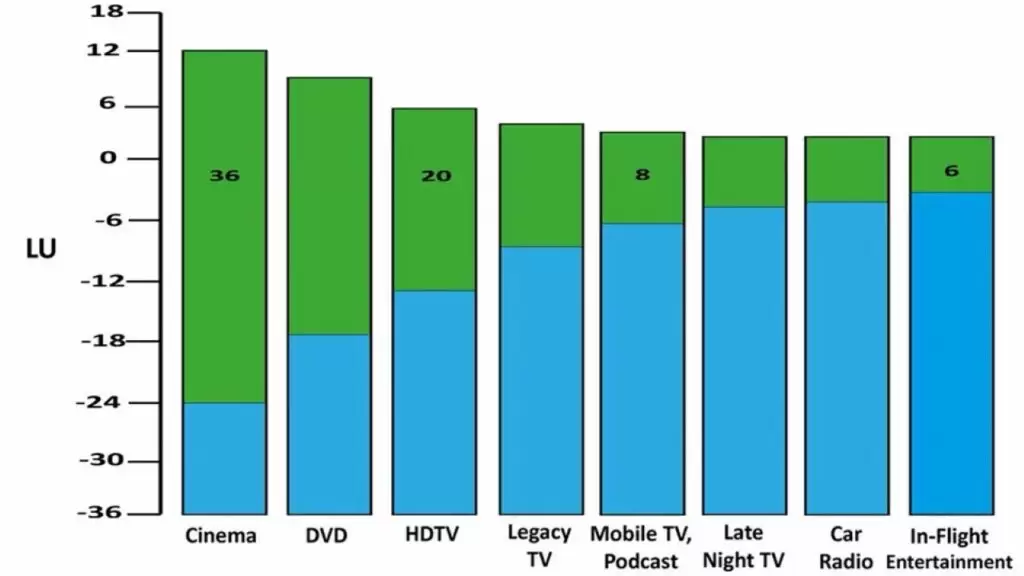
Figure 2: LRA data comparison of film, TV, streaming, mobile and broadcast media | Source: Production Expert
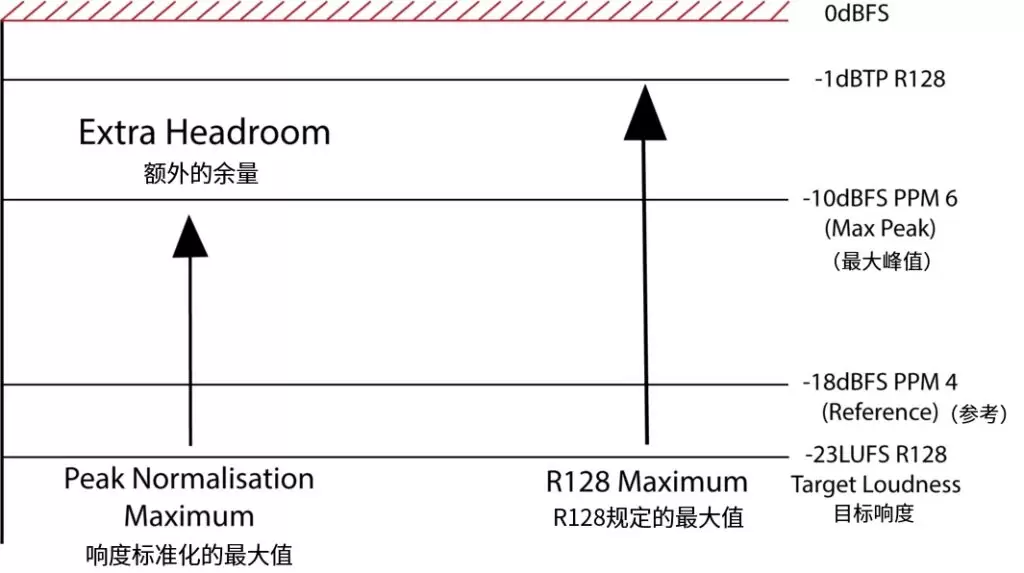
Figure 3: Professional loudness metering standard and peak value control specification
Before the popularization of loudness normalization, the peak volume of dialogue was guaranteed. After adopting the average loudness algorithm, a large number of high-volume music and special effects occupy the loudness quota, forcing the dialogue volume to be continuously reduced.
2.6 Lossy Audio Compression for Streaming
OTT streaming, digital TV and satellite broadcasting all use HE-AAC and other lossy compression codes to save bandwidth. The high-frequency weak consonant signals that determine clarity are preferentially compressed and discarded, causing irreversible damage to dialogue.
2.7 Defects of Modern TV Hardware
Ultra-thin flat-panel TVs abandon large-size front speakers. Most products are equipped with small rear speakers, which lack mid-high frequency diffusion ability and cannot restore clear human voice details.
2.8 5.1 Surround Sound Downmixing Defects
More than 90% of families use stereo two-channel playback. When 5.1 surround sound is downmixed, the center channel where the dialogue is located will be attenuated by 3dB. The phantom center sound formed by left and right speakers will cause acoustic interference and further blur the dialogue.
3. Experimental Verification: Optimizing LRA Can Effectively Improve Intelligibility
The author used professional loudness measurement tools such as NUGEN Audio VisLM-H to test classic streaming works, and recorded the integrated loudness and independent dialogue loudness data.
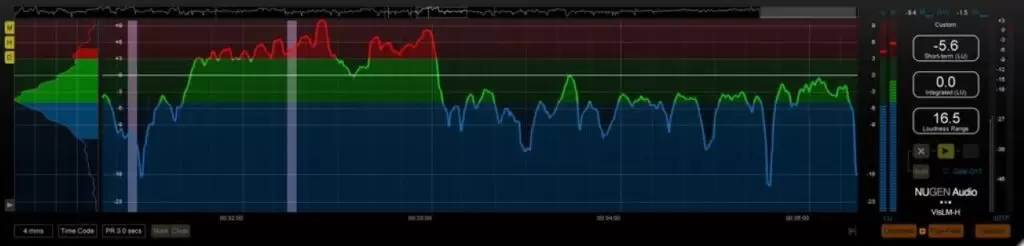
Figure 4: NUGEN Audio VisLM-H loudness analysis tool actual measurement interface
Test Data Summary
Program Name Integrated Loudness (LUFS) Independent Dialogue Loudness (LKFS) Planet Earth 2 -23.0 -26.1 The Grand Tour -23.0 -26.3
The test results prove that the dialogue loudness of mainstream high-quality streaming programs is significantly lower than the overall mixed sound. After manually compressing and optimizing the LRA to narrow the loudness gap:
-
- Dialogue loudness increased significantly
- The volume balance of human voice, music and sound effects is more reasonable
- No need for viewers to frequently adjust the TV volume
Industry organizations have begun to issue mandatory specifications:
-
- Netflix: Limit dialogue LRA within 7LU
- DPP UK: Factual program dialogue loudness range ≤6LU
- CBC Canada: Overall LRA controlled below 8–10LU
4. Professional Technical Solutions
4.1 Rational Downmixing & Sound Channel Optimization
Use professional downmix plug-ins to protect center channel dialogue signals and reduce stereo downmix loss.
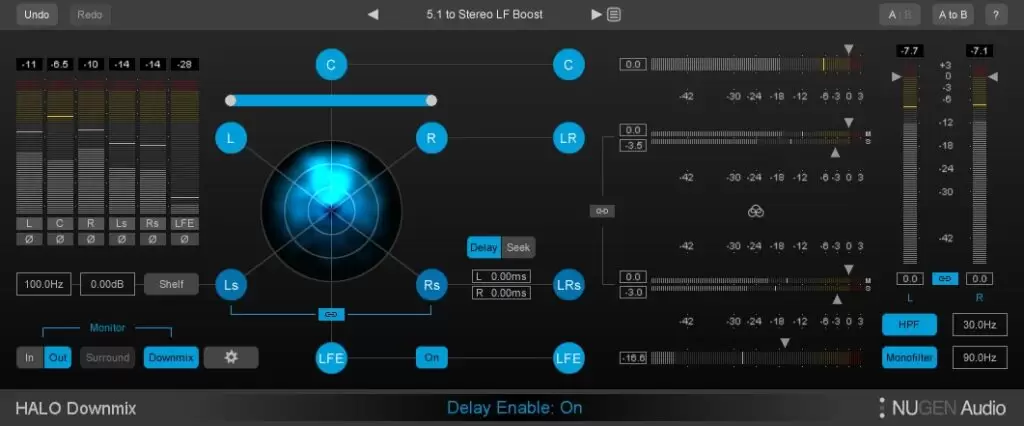
Figure 5: Professional audio downmix processing tool for film and television post-production
4.2 Introduce Intelligibility Monitoring Tools
Add speech intelligibility meters in the mixing stage, such as iZotope Insight 2, to monitor high-frequency consonant energy in real time and avoid excessive masking of human voice.
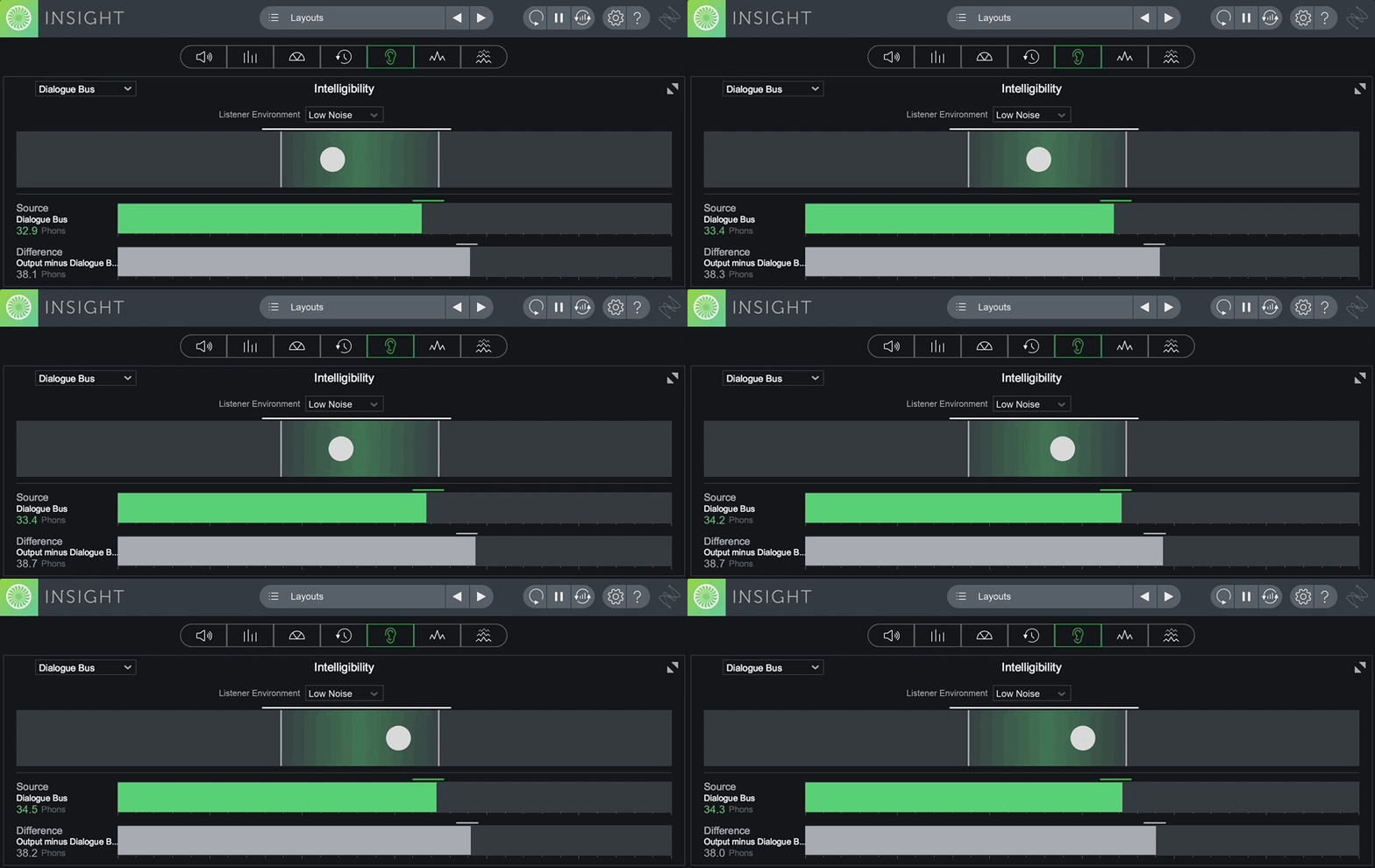
Figure 6: Real-time intelligibility analysis and metering function of post-production audio software
4.3 Differentiated Mixing for Home Viewing
Separate cinema mixing and streaming home mixing, control the overall LRA below 10LU, and reserve independent loudness space for dialogue.
4.4 Object-based Audio Technology
MPEG-H object audio marks dialogue, music and sound effects independently. Viewers can one-click boost dialogue volume on smart TVs and streaming platforms, which is the future mainstream solution for accessible audio.
4.5 Standardize Actor Voice Performance
Strengthen voice projection training for actors, restrict excessive ambiguous murmuring, and balance artistic expression and audience listening experience.
5. Conclusion
The widespread use of subtitles by hearing audiences is not a viewer habit problem, but a systematic defect in modern film and television audio production.
Uncontrolled loudness normalization, excessive dynamic range, unreasonable mixing logic, hardware limitations and compression loss together lead to the continuous decline of dialogue intelligibility.
For audio practitioners, directors and platform parties, it is necessary to rebalance artistic expression and public listening experience, formulate more scientific loudness standards, and optimize the whole process from shooting sound collection, post-mixing to streaming delivery.
Only by ensuring clear and understandable dialogue can we fundamentally solve the subtitle dependence of global audiences.


UNCUCO S-01A Straight Type Professional Recording Studio Desk-Music Production
Price range: $1,295.00 through $1,758.00

UNCUCO S-02B Curved Type Recording Studio Desk-19 Inch Rack Workstation
Price range: $1,323.00 through $1,695.00

UNCUCO S-03C Curved Type Studio Desk | Professional Music Production Desk for Audio Console Mixer
Price range: $1,678.00 through $1,887.00