

Target Keywords: best desk for world cup coverage, broadcast desk buying guide
Published: April 2026 | Reading Time: ~8 min
The 2026 FIFA World Cup kicks off on June 11 and runs through July 19 — 39 straight days of the most-watched sporting event on the planet. For broadcasters, sports podcasters, YouTube commentators, and media teams, this is a once-in-a-generation opportunity to grow an audience and establish a professional on-air identity.
But here’s the hard truth: in the age of 4K streaming and high-definition video, your desk is on camera. It’s not background noise — it’s the visual statement your audience reads before you say a single word.
Whether you’re building a home commentary studio, upgrading a local TV newsroom, or outfitting a sports podcast setup, choosing the right desk before the World Cup begins is one of the highest-leverage decisions you can make right now.
This broadcast desk buying guide breaks down the five non-negotiable factors every broadcaster should evaluate — backed by the standards used by professional studios worldwide.
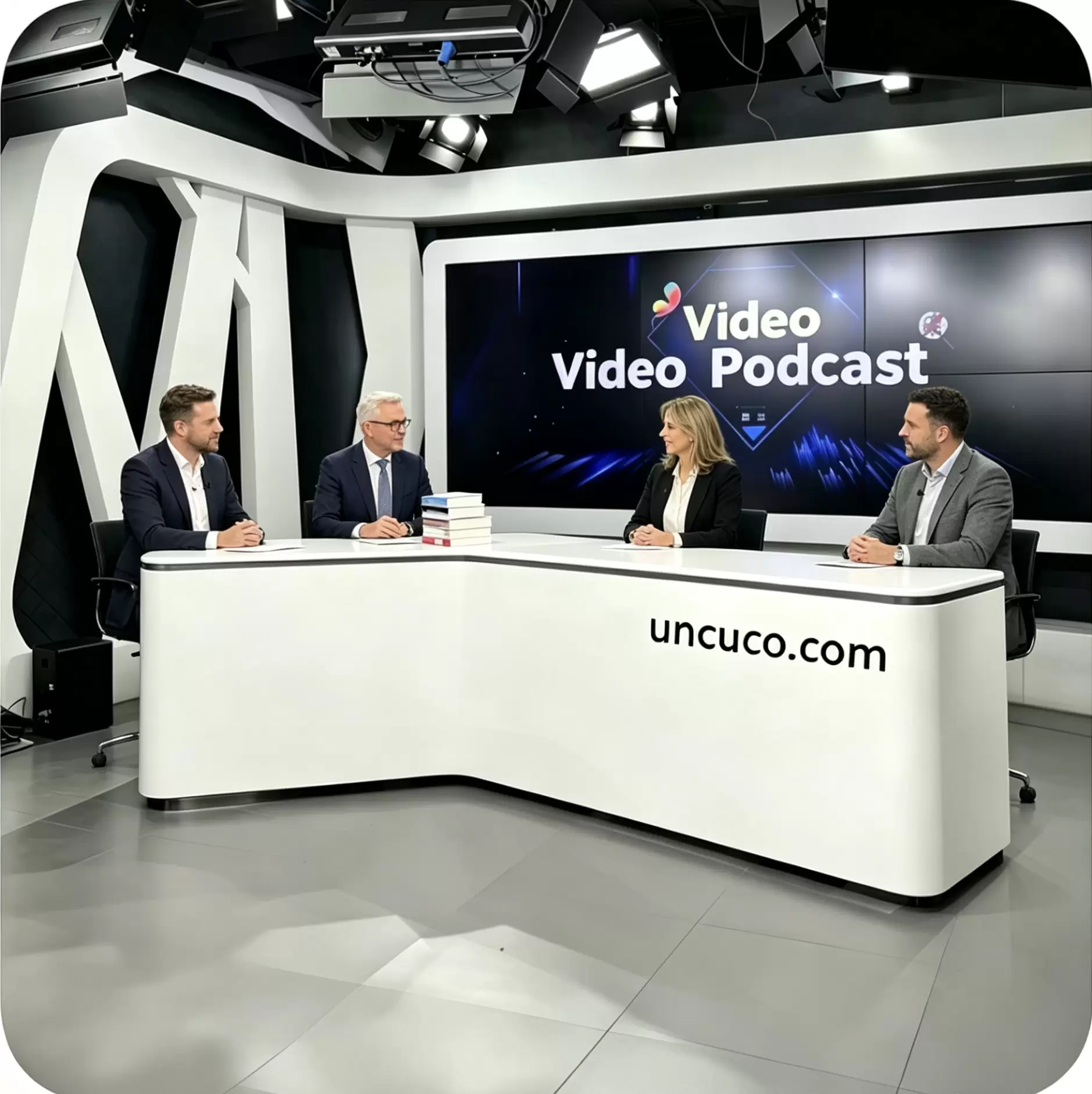
A professional broadcast desk sets the visual tone of your entire coverage.
1. Surface Reflectivity — The 4K Problem No One Talks About
If you only remember one thing from this guide, make it this: 4K cameras are brutally honest about surfaces.
At 1080p, a slightly reflective desk might be forgivable. At 4K — which is now the baseline for YouTube, streaming platforms, and broadcast delivery — a high-gloss or light-colored desk surface creates visible reflections, lens flare, and distracting hotspots that no amount of post-processing can cleanly eliminate.
What to look for:
Matte or low-glare finish rated below 20% reflectance. This is the standard used by major broadcast networks. A surface labeled “matte laminate,” “satin finish,” or “anti-glare coating” is the right direction. Stay away from high-gloss acrylic or untreated light wood — both are highly reflective under studio lighting.
Neutral, mid-tone color range. Pure white desks cause blown-out highlights in camera. Pure black can absorb too much light and flatten the image. The broadcast industry sweet spot is mid-range neutrals: warm grey, moonlight grey, charcoal, or warm espresso tones. These hold visual detail and complement the skin tones of presenters on camera.
Tested under your lighting setup. Before committing to a desk, simulate your studio lighting (especially if you’re using ring lights, LED panels, or key/fill setups) and check for unwanted reflections at your camera angle.
Pro tip: The test is simple — point your camera at the empty desk under your lights. If you can see a visible “hot spot” or reflection on the surface in the monitor, the desk will look unprofessional on air during 39 days of World Cup coverage.
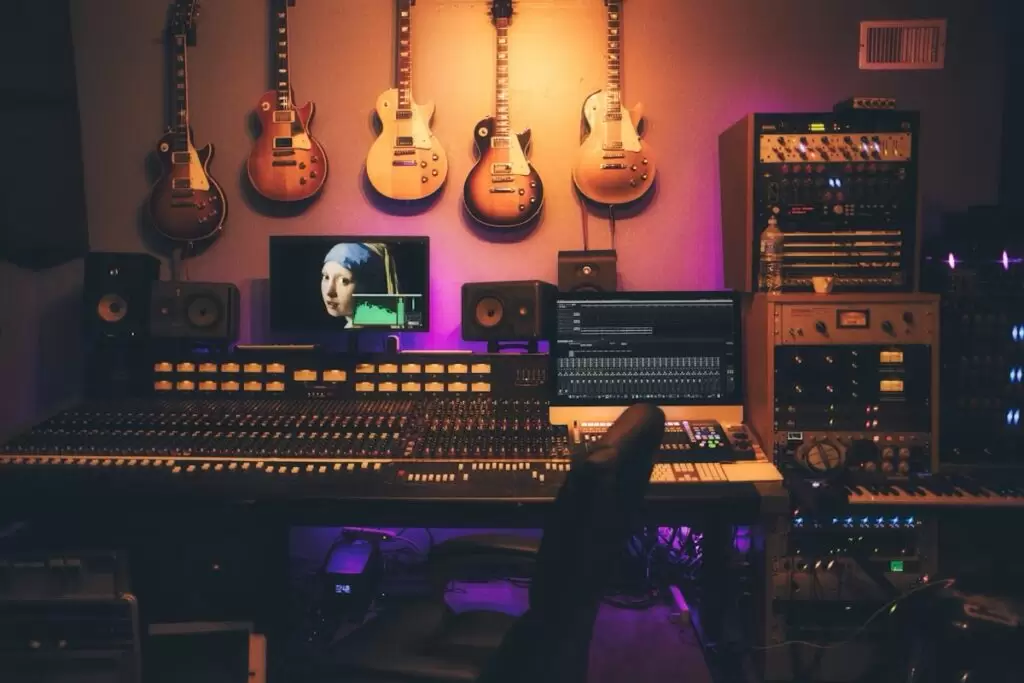
Surface finish under broadcast lighting is what separates amateur setups from professional ones.
2. Load Capacity and Structural Stability — More Equipment Than You Think
World Cup broadcast setups are heavy. Here’s a realistic equipment inventory for a mid-tier sports commentary desk: Equipment Approximate Weight 2× 27” monitors 10–14 kg Camera (mirrorless + lens) 1–2 kg Mixing console / audio interface 3–8 kg Microphone arm(s) × 2 1–2 kg Teleprompter 2–4 kg Lighting rigs (desktop) 2–5 kg Laptop + peripherals 2–3 kg Total~21–38 kg minimum
That’s before you add secondary monitors, multi-camera switching hardware, or the inevitable “just one more thing” that always appears in broadcast workflows.
What to look for:
Rated load capacity of at least 80–150 kg (distributed). A desk rated for 150 kg distributed load handles a full professional rig without surface flex or structural fatigue over time. Desks built on reinforced cold-rolled steel frames (1.2–1.8mm thickness) combined with E1-grade density board panels are the industry benchmark.
Zero wobble under dynamic load. Live broadcasts involve movement — leaning in during exciting match moments, reaching across the desk, repositioning microphones between segments. A desk that wobbles under dynamic load introduces camera shake and creates unprofessional on-air audio artifacts. Test stability by placing your hands on both edges and applying light rocking pressure before purchase.
Monitor arms and mic boom mounts rated to match. The desk rating is only as good as its mounting points. Ensure the desk features reinforced mounting brackets or dedicated hardware points for monitor arms and microphone booms, not just surface holes.
3. Cable Management — The Detail That Reveals Amateur vs. Professional
You can have a $10,000 camera, $5,000 worth of lighting, and a stunning background — and one tangle of cables running across your desk surface will immediately tell your audience: this is not a professional studio.
This is one of the most overlooked factors in broadcast desk buying guides, and it becomes especially critical during extended World Cup coverage when you’re running:
-
- Multiple HDMI cables (cameras, monitors, capture cards)
- XLR audio cables (microphones, audio interfaces)
- USB cables (streaming hardware, controllers)
- Power cables (everything above)
- Ethernet cables (if you’re hardlined for reliability during live broadcasts)
What to look for:
Integrated internal routing channels. The gold standard is a desk with internal cable pathways — hollow channels built into the desk frame that allow cables to run from equipment mounting points down through the legs and out at the base, completely invisible on camera. Every cable disappears.
Perforated side or rear panels. These allow cables to exit the desk structure cleanly, grouped and organized, rather than spilling over the edge.
Dedicated pass-through ports on the work surface. Surface grommets positioned at logical equipment locations (monitor positions, microphone positions, laptop positions) allow cables to drop vertically through the desk rather than running horizontally across the surface.
Under-desk cable trays or raceways. For desks without full internal routing, a mounted under-desk cable tray that runs the full width of the desk is the next best option.
The camera test: Set up your desk fully cabled for broadcast. Take a wide shot at your camera’s standard framing. If you can see cables, viewers can see cables. Clean setups communicate professionalism — and during World Cup coverage, when millions of new viewers may be discovering your channel, first impressions matter enormously.
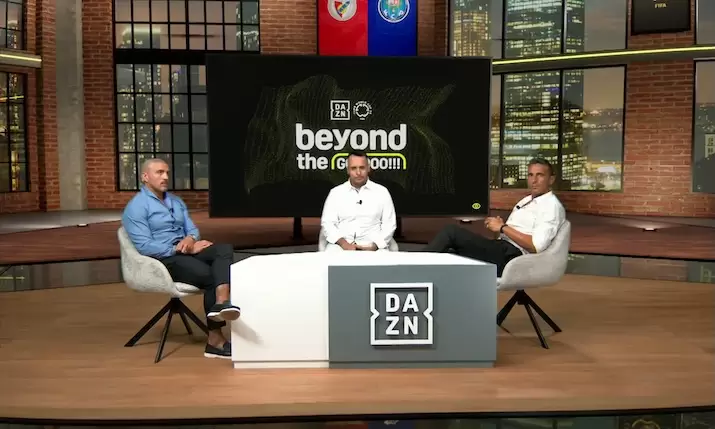
Integrated cable management is the difference between a studio that looks professional and one that doesn’t.
4. Ergonomics — Built for 39 Days, Not 39 Minutes
The 2026 World Cup spans 39 days, with 104 total matches spread across multiple time zones. For broadcast teams covering the tournament seriously, this means long production days — often 8 to 12 hours — sustained across more than five weeks.
An ergonomically poor desk doesn’t just cause discomfort. It causes:
-
- Presenter fatigue that shows on camera (posture collapse, loss of energy and presence)
- Repetitive strain injuries to wrists, shoulders, and neck
- Reduced cognitive performance over multi-hour sessions
- Vocal quality degradation as posture affects breathing and projection
What to look for:
Broadcast-optimized height (approximately 720–750mm / 28–29.5 inches). Standard office desk heights (730–760mm) are designed for seated computer work. Broadcast desks are optimized slightly lower to support the camera angle while keeping the presenter’s posture natural and their eye line at the correct position relative to the lens.
Curved front edge. A desk with a curved or radiused front edge reduces pressure on the forearms during extended sessions — a feature specifically engineered for broadcast use, where presenters lean forward during high-tension moments (penalties, last-minute goals) and hold that position.
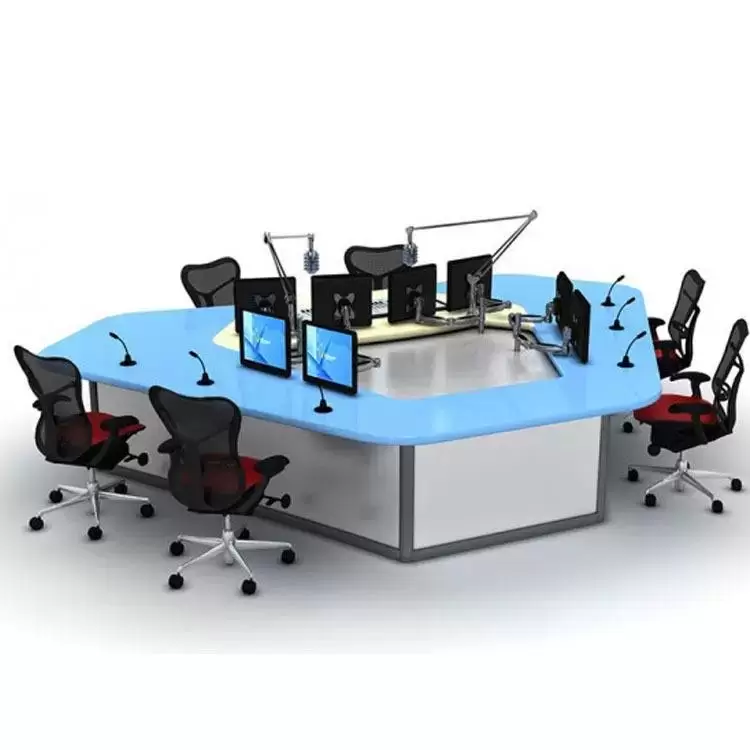
Presenter zones with defined equipment positioning. A well-designed broadcast desk positions monitors at the correct viewing distance (50–70cm), places microphone arms within reach without strain, and keeps notes and scripts accessible without requiring the presenter to break eye contact with the camera.
Height adjustability. If multiple presenters of different heights are sharing the desk across the tournament (common in sports broadcast), height-adjustable mechanisms prevent the compromised posture that comes from a fixed desk that doesn’t fit the presenter.
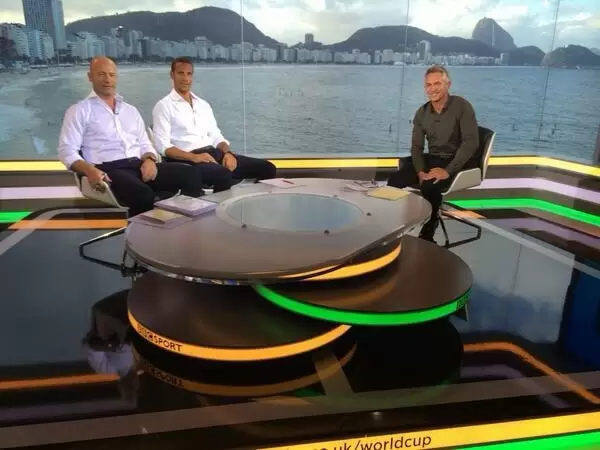
Ergonomic design is essential for teams covering a full 39-day World Cup tournament.
5. On-Camera Aesthetics — Your Desk Is Your Brand
The fifth factor is the one most buyers address last, but arguably the one your audience notices first.
The 2026 World Cup will generate an unprecedented volume of sports content across every platform. Viewers scrolling through YouTube thumbnails, podcast artwork, and social media clips are making split-second decisions about which broadcasts to watch. Your desk is the primary visual element in most of those thumbnails and preview frames.
This is not a secondary concern. It’s a brand decision.
What to look for:
Visual alignment with your brand identity. A news operation projects authority — clean lines, dark or neutral surfaces, architectural lighting integration. A sports podcast channel might use a more dynamic desk design with LED accent lighting. A corporate media team needs a desk that communicates credibility to clients. The desk’s visual language should match the story you’re telling about your brand.
LED lighting integration. RGBW LED lighting built into the desk fascia or base panel allows you to match your broadcast’s visual identity — and dynamically change color during the World Cup to reflect match themes, team colors, or brand moments. This is a feature used by major sports networks and increasingly by professional independent broadcasters.
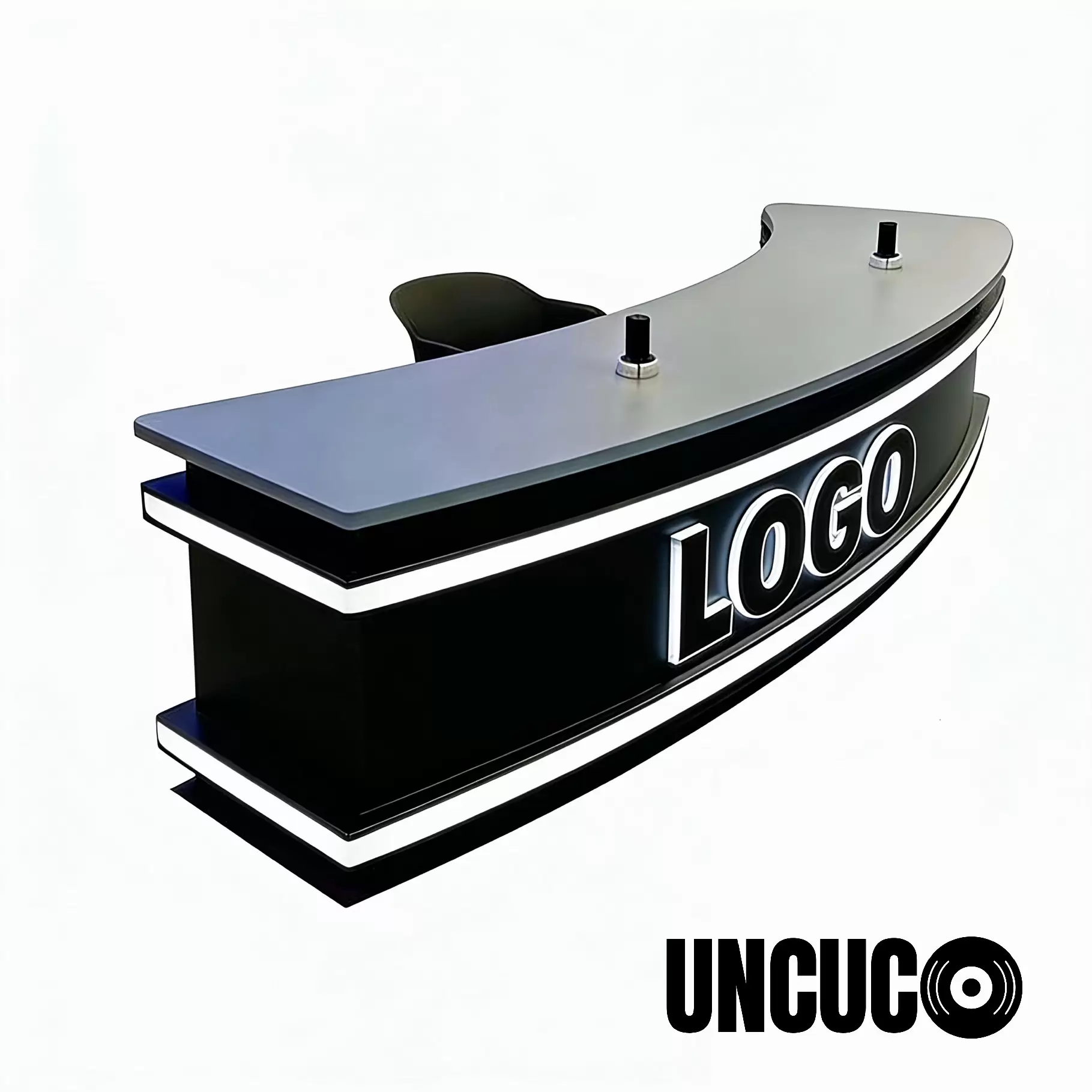
Customizable branding surfaces. Look for desks that offer logo integration — either via engraved panels, LED displays, or custom vinyl application — so your channel identity is consistently present in every on-air frame.
Finish durability under production conditions. World Cup coverage is intense. Equipment gets moved, surfaces get bumped, and finish wear is real over 39 days of daily production. Scratch-resistant high-gloss laminates or matte powder-coat finishes hold their appearance significantly better than painted or natural wood surfaces under production conditions.
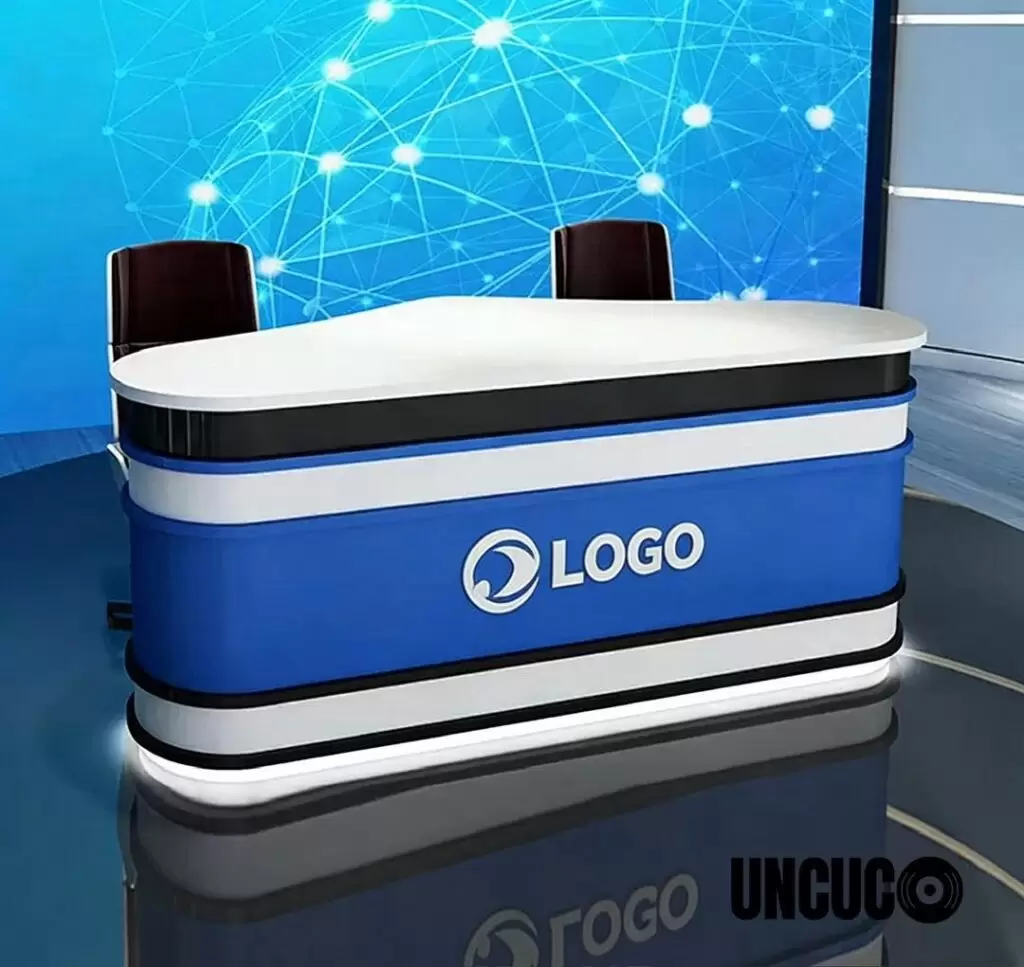
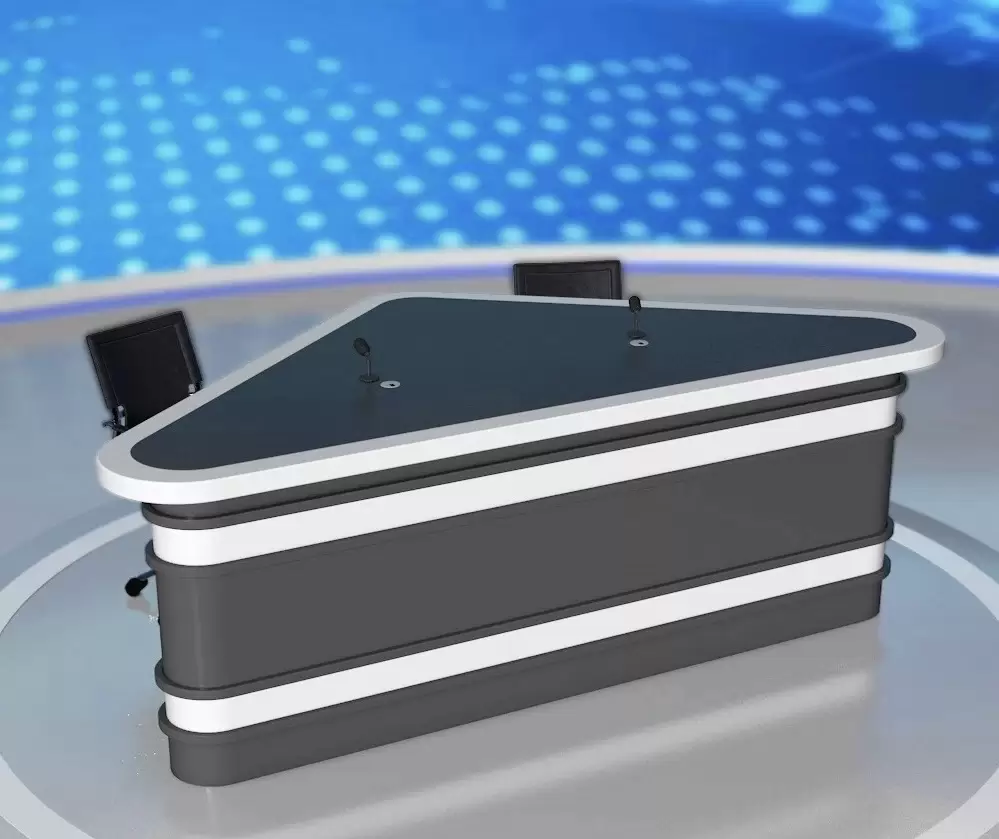
On-camera aesthetics and integrated lighting define your visual brand identity across 39 days of coverage.
Quick Reference: Broadcast Desk Buying Checklist
Use this checklist when evaluating any desk for your 2026 World Cup setup:
Surface & Optics
-
- [ ] Matte or satin finish (< 20% reflectance)
- [ ] Mid-tone neutral color (warm grey, charcoal, espresso)
- [ ] Tested under your studio lighting conditions
Structure & Stability
-
- [ ] Minimum 80 kg rated distributed load capacity
- [ ] Reinforced steel frame construction
- [ ] Zero wobble under dynamic load test
- [ ] Dedicated mounting points for monitor arms and mic booms
Cable Management
-
- [ ] Internal routing channels OR under-desk cable tray
- [ ] Surface pass-through grommets at equipment positions
- [ ] Perforated panels for clean cable exit
- [ ] Passes the camera test (no visible cables on screen)
Ergonomics
-
- [ ] Broadcast-optimized height (720–750mm)
- [ ] Curved or radiused front edge
- [ ] Defined presenter zones for monitors, microphone, notes
- [ ] Height adjustability (if multi-presenter setup)
Aesthetics & Brand
-
- [ ] Visual alignment with brand identity
- [ ] LED lighting integration available
- [ ] Custom branding/logo options
- [ ] Durable finish rated for daily production use
Frequently Asked Questions
Q: What is the best desk height for broadcast coverage?
A: Most professional broadcast desks are engineered at 720–750mm (approximately 28–29.5 inches), slightly lower than a standard office desk. This height supports natural on-camera posture and optimal camera angles for seated presenters during extended coverage sessions.
Q: Does desk color really matter for 4K video?
A: Yes, significantly. High-gloss white desks create blown-out highlights and distracting reflections at 4K resolution. Pure black surfaces absorb too much light. Mid-tone neutrals (warm grey, charcoal, espresso) perform best under broadcast lighting conditions and read as professional and credible on camera.
Q: How much weight can a professional broadcast desk hold?
A: Professional broadcast desks built for live coverage environments are typically rated at 100–200 kg distributed load. This comfortably accommodates a full live production rig including multiple monitors, audio hardware, camera systems, and lighting accessories.
Q: Is cable management really important for a desk?
A: It’s one of the most impactful single upgrades available to a broadcaster. A desk with integrated cable management transforms the visual quality of your broadcast immediately — no cables on camera means your setup reads as a professional studio, not a home setup. For World Cup coverage, where you may be attracting thousands of new viewers, this is critical.
Q: Can I customize a broadcast desk with my brand logo?
A: Yes — quality broadcast furniture manufacturers offer logo integration via engraved panels, LED light displays, or branded vinyl application. This is standard practice for professional sports broadcast operations and is increasingly adopted by independent content creators building a recognizable channel identity.
Ready to Build Your 2026 World Cup Studio?
The 2026 FIFA World Cup begins June 11. That gives you roughly 8 weeks to specify, order, and install your broadcast desk before the opening match. For custom-manufactured broadcast furniture, that timeline is tight — most quality manufacturers require 3–4 weeks from design approval to delivery, plus installation time.
If you’re building a World Cup commentary studio, sports podcast setup, or broadcast newsroom for the tournament, now is the time to act.
Browse our full range of professional broadcast desks →
Explore:
-
- News Anchor Desk (T-01) — Designed for TV news, sports broadcasts, and live streaming studios
- Podcast Desk — Multi-host configurations for sports commentary and analysis shows
- Studio Recording Desk — Production workstations for sports broadcast audio and post-production
📧 [email protected] | 💬 WhatsApp: +8615989288128 (24/7)
Have questions about which desk is right for your World Cup setup? Contact our studio design team — we’ll help you spec the right configuration for your space, equipment, and coverage goals.